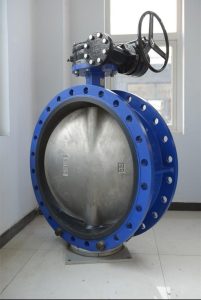
What is the difference between API and DIN valves?
In the valve industry, standards play a crucial role in valve design, manufacturing, dimensions, testing, and performance. API and DIN are two well-known sets of standards in this field. However, API and DIN do not represent the exact same concept; one cannot simply label a valve as “API” or “DIN” and declare one superior to the other. Each of these standards was developed for specific applications and requirements, and the choice between them must be based on project needs.
What is the API standard?
API stands for the American Petroleum Institute. API standards are widely used in the oil, gas, refining, and petrochemical industries, establishing technical requirements for much of the equipment employed in these sectors. For instance, certain API standards pertain to industrial valves, specifying requirements for the design, manufacturing, testing, and performance of specific types of valves.
Application of valves meeting API standards
Oil and gas industries, refineries, petrochemicals, oil transmission lines, gas transmission lines, process equipment.
What is the DIN standard?
DIN stands for *Deutsches Institut für Normung* (German Institute for Standardization). DIN standards cover a vast range of industrial products and equipment and are utilized in many countries worldwide. In the field of valves, DIN standards address various specifications, such as dimensions, design, materials, connections, and technical requirements. The primary distinction between API and DIN lies in their respective standardization systems and fields of application.
Is an API valve better than a DIN valve?
No. The notion that API is always superior to DIN is incorrect. A valve must be selected based on project conditions and the required standard. If a project is designed according to API standards, it is important to use a valve that meets the relevant API specifications. Conversely, for projects requiring DIN specifications or European standards, the valve is selected to comply with the applicable standard. Therefore, the concept of one being “better” than the other is meaningless without considering the specific application.
The difference between API and DIN valves in the oil and gas industries, in the oil and gas industries,
API standards are widely used due to their direct relevance to much of the industry’s equipment. For instance, when selecting transmission line valves and process equipment, API standards concerning valve type, pressure ratings, design, and testing may be required for the project. Conversely, certain equipment and valves used in European projects—or those adhering to DIN/EN technical specifications—are selected in accordance with the relevant standards.
Do API and DIN standards affect valve pressure ratings?
A standard may specify requirements regarding design, dimensions, testing, and pressure ratings; however, it cannot be stated that all API valves are rated for higher pressures than all DIN valves. The pressure capacity of any given valve depends on various factors: design, size, material, pressure class, operating temperature, valve type, and the applicable standard. Regarding the dimensional differences between API and DIN valves, valve dimensions are determined by the design standard and the valve type. In industrial projects, even if two valves share the same nominal size, they may differ in terms of:
Valve length
Connection type
Flange dimensions
Drilling
Thickness
Weight
Different from one another. For this reason, when replacing an API valve with a DIN valve—or vice versa—one should not focus solely on the nominal size.
Difference Between API and DIN Valve Testing
Each standard has its own specific requirements and testing procedures. Depending on the valve type, tests such as body, leakage, pressure, performance, and sealing tests may be conducted. For critical projects, it must be precisely specified according to which standard—and which revision of that standard—the valve has been manufactured and tested.
Which standard is better for the export of valves and faucets?
When it comes to exports, no single standard can be considered superior for all markets; the most important factor is the standard accepted by the destination country and the specific project. For instance, one buyer might request technical specifications based on API, while another prefers DIN/EN standards. Therefore, the exporter must obtain the customer’s required technical specifications and standards before sourcing the product.
What points should be considered when purchasing API or DIN valves?
The following points must be clarified before purchase:
Valve Type
Size
Working Pressure
Working Temperature
Fluid Type
Body Material
Internal Parts Material
Connection Type
Design Standard
Testing Standard
Pressure Class
Required Technical Documentation
Which valve should we choose for the project?
If your project falls within the oil, gas, refining, or petrochemical sectors, first review the project’s technical specifications and the client’s required standards. If the project is designed based on specific European or German standards, it is crucial to use valves that comply with the relevant standard. Ultimately, the project standard—rather than merely the API or DIN designation—should dictate the choice of valve; in summary, API and DIN represent two distinct standardization systems.Each of these finds application in various industries. API is particularly significant in the oil, gas, refining, and petrochemical sectors, whereas DIN encompasses a broad range of industrial standards. Therefore, when purchasing or exporting industrial valves, rather than asking “Is API better than DIN?”, one should consider: which standard is required for the specific project and destination market? The correct choice should be based on factors such as valve type, pressure, temperature, material, fluid type, connection dimensions, and the project’s specific standard requirements.